
Through the Ages
CGE digitalBoard
4.81.14K Reviews
- Version
- 2.19.1144
- Installs
- 100.00K
- Age Rating
- Everyone 10+
Screenshots
Our Review of Through the Ages
 Analysis by Appyee
I usually recommend a strategy game only when its decisions feel interesting beyond the first few turns. Through the Ages has that quality: it asks you to shape a civilization over time, but the pleasure comes from weighing competing needs rather than simply watching a settlement grow. This is a demanding board game adaptation from CGE digital, and I think it suits players who enjoy planning several moves ahead more than people looking for a quick, low-effort pastime.
What the civilization-building asks of you
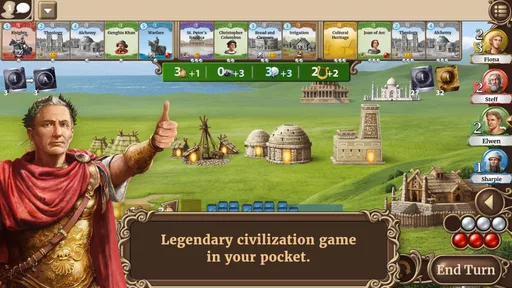
You develop a society by choosing technologies, leaders and wonders, while managing resources, military strength and the needs of your people. Those priorities pull against one another. Investing in one direction can leave another exposed, so a promising plan may need to change when the available cards or an opponent’s choices shift the situation. For me, that tension is the game’s strongest hook: progress feels earned, and a decision that looks clever now can create a problem later.
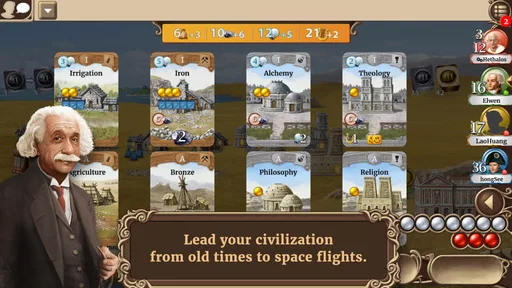
The card system gives each playthrough its own character. I find it useful to decide what kind of position I want before taking every attractive card: a technology may be powerful, but it is not automatically the right choice if I cannot support it with the resources or actions my civilization needs. New players can focus on understanding the relationship between choices first, rather than trying to build a perfect strategy immediately. That makes early games less intimidating and helps explain why repeating a familiar plan is not always enough.
Learning the rules without rushing
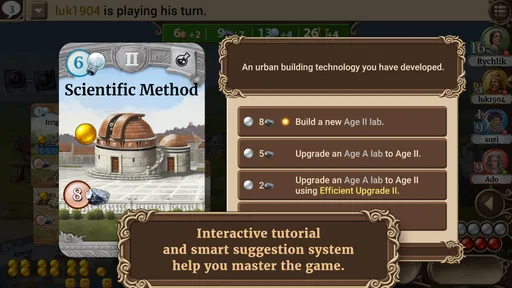
The tutorial breaks the rules into manageable pieces, which helps when you are meeting a game with this much going on. I would still approach the first session as a learning game. There are enough connected decisions that trying to absorb every strategic implication at once can make the experience feel heavier than it is. Taking time to understand how your choices affect resources, growth and military readiness is more useful than memorizing a single opening approach.
The digital format is convenient if you do not have the physical board game nearby or a group ready to play. It also removes some of the practical work of maintaining a tabletop state, leaving you to concentrate on the decisions. That convenience does not turn the game into a casual filler, though. A full strategic arc still asks for attention, and I would not choose it when I only have a brief moment and want something I can dip in and out of without losing track.
Choosing between solo and multiplayer
Playing against the AI gives you room to test ideas without coordinating schedules. The different difficulty levels let you look for a suitable challenge, and solo sessions are a sensible place to learn how competing priorities interact. I like this option for experimenting with a different approach, especially when I want to see what happens if I emphasize science or military rather than following the instincts of my previous game.
Online multiplayer changes the feel because other people make the choices that shape the contest. Friends can make a good match for learning together, while random opponents offer a less predictable challenge. Either way, I would go in expecting a thoughtful game, not a quick head-to-head round. If your group prefers light rules, immediate turns and little planning between moves, a simpler board game will probably be a better fit.
Visual design and day-to-day usability
The artwork and animations give the adaptation a polished presentation without taking over the experience. I find the interface approachable for a game with several systems to manage, and its menus make it easier to move between the different parts of play. Still, an intuitive layout cannot remove the mental work of tracking your civilization’s needs. On a small screen, anyone who prefers large, uncluttered visuals may want to take their time with the interface rather than rushing through choices.
That distinction matters when deciding whether the game is comfortable for you. Its appeal depends on reading the state of play and comparing options, so it is a better match for someone who enjoys examining a board-like layout than for someone who wants constant motion or minimal visual information. The tutorial helps with the rules, but it does not make the strategic decisions effortless. I would treat the first session as a chance to learn the presentation and pace as well as the game itself.
Who will get the most from it
I would point this toward players who enjoy civilization themes, card-driven decisions and games where a strong plan has to adapt. It can work for someone new to the genre if they are willing to learn gradually, but it is not my first recommendation for a player who wants a quick match or a very simple introduction to board games. Likewise, if you dislike balancing several kinds of progress at once, the very quality that makes this game rewarding may feel like a burden.
A realistic use case is a quiet evening when you have time to focus: you can work through a solo game, notice where your economy or military choices are limiting you, then try a different emphasis next time. If you are playing with friends, it helps to agree that the session is for a substantial strategy game rather than a short filler. That expectation makes the deliberate pace feel like part of the appeal instead of an inconvenience.
How it compares with lighter board games
Compared with familiar quick-play board games, this is a more involved commitment. Its civilization development and interlocking choices offer more room to plan than a game built mainly around fast turns or simple luck. That depth is a strength when I want to think through consequences, but it also means it is less suitable for a mixed group where some players want to learn the rules in minutes and get straight to a brisk round.
It also differs from a purely casual mobile game: the phone or tablet is the way to play, not a promise that every session will be short or undemanding. If you want an easy distraction while doing something else, I would choose a less strategic option. If you want a board game experience that rewards attention and gives you reasons to try another approach, this one has a much stronger case.
Price, age suitability and practical expectations
The game costs $9.99, with in-app purchases listed at $4.99 per item. I would consider the purchase in light of how often I enjoy longer strategy sessions, rather than expecting a casual game to justify it through quick bursts of play. Its average rating is 4.8 from around 15,000 ratings, with around 1,100 written reviews and over 100,000 installs. Those figures suggest a well-received game, but the right question for me is still whether its deliberate, demanding style matches what I want to play.
It is rated Everyone 10+, so I would consider it for players comfortable with strategic decision-making and a more complex board-game structure, rather than judging suitability by the civilization theme alone. The game was released on September 14, 2017, and its current version is 2.19.1144; it requires Android 8.0 or later. On iOS and Android, I would still check that the device and operating system are suitable before buying, and think about whether the intended player will enjoy reading and comparing several options during a session.
Readability, navigation and access needs
For me, the tutorial and organized menus are the most helpful starting points for anyone who needs time to become familiar with a complex screen. I would play the tutorial at a comfortable pace, pause to inspect each decision, and avoid treating early mistakes as proof that the game is too difficult. Replaying with a different priority can make the consequences of a choice clearer than trying to remember every rule at once.
There is a practical trade-off for players who find dense screens tiring or who prefer large text and very simple layouts: the game’s depth requires attention to its board-like information and card choices. I would not assume that the polished interface makes every detail equally easy for every player to scan. A larger display may be more comfortable for some people, while others may prefer the portability of a phone. The best choice depends on which setup lets you read and think without strain.
Motor, sensory and situational considerations
The experience is centered on deliberate choices rather than rapid action, which may be appealing if you prefer a thoughtful pace over reflex-based play. At the same time, making decisions still involves navigating menus and selecting cards, so anyone who finds touch interaction difficult should consider how comfortable their device is to handle. I would try a short learning session before settling in for a longer game, especially if repeated taps or close attention to the screen are tiring.
Sound and animation are part of the presentation, but the strategic core is in following the state of your civilization and weighing options. That makes the game better suited to a calm setting where you can concentrate than to a noisy commute or a moment full of interruptions. If you need to stop often, a complicated turn can be harder to resume than a simple puzzle. I would choose a session when I can give the game steady attention, rather than trying to fit it into every spare minute.
Where the experience can fall short
The biggest barrier is the learning curve. A tutorial can introduce the rules, but it cannot remove the need to understand how choices affect one another. New players may feel unsure about which cards matter most, and experienced strategy fans may still need time to adjust their habits. I recommend focusing on one or two priorities in a first game and using the result to learn, rather than expecting a polished civilization from the outset.
Another limitation is fit. The game is not ideal for people who want a low-pressure app, a fast round, or a screen that asks very little of them. Multiplayer is attractive when you have someone willing to play at a similar level and pace, but solo play may be more convenient when schedules do not line up. Neither mode changes the central fact that this is a game for deliberate planning; if that sounds more like work than fun, a lighter board game is a more sensible choice.
My verdict on its inclusive appeal
Through the Ages makes a strong case for players who want a thoughtful civilization game on a mobile device. Its tutorial, clear presentation and solo option give different kinds of players a way in, while the depth rewards people who like to learn through repeated decisions. I would recommend taking it slowly, choosing a quiet moment and treating the first session as practice rather than a test of skill.
I would skip it if your priority is a very short, visually simple or interruption-proof game. For everyone else, the best reason to try it is the way each choice can reshape what seems possible next. It is a substantial board game experience, not an effortless distraction, and that distinction is exactly why I would recommend it to a friend who enjoys planning and is happy to give a game their full attention.
Getting Started with Through the Ages
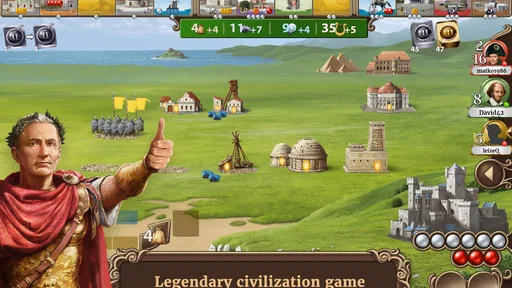
So, what’s the deal with Through the Ages? At its core, it’s a civilization-building game where you start from scratch, working your way through different ages of human development. You’ll be managing resources, building wonders, and leading your civilization to greatness—or maybe to ruin if things don’t go your way.
The app is available on both Android and iOS, and setting it up is a breeze. Once you install it, you'll be greeted by a well-designed interface that stays true to the board game’s classic feel. The tutorial is super helpful for newcomers, breaking down the complex mechanics into digestible chunks.
Diving into the Gameplay
Now, let’s talk about the gameplay. You start with a small tribe, and your mission is to expand your civilization by acquiring new technologies, building military strength, and keeping your people happy. Sounds simple, right? Well, not quite. The strategy is deep, and the decisions you make will have lasting impacts on your progress.
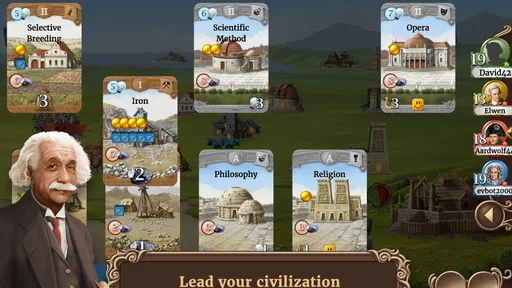
One of the highlights of Through the Ages is its card system. Each card represents a technology, leader, or wonder that you can add to your civilization. Balancing the cards you choose is crucial, as they dictate your strategic path. Do you focus on science, military, or maybe culture? The choice is yours, and that's where the fun really kicks in.
Graphics and User Experience
Visually, the app is a treat. The developers have done a stellar job in translating the board game’s aesthetic into a digital format. The artwork is crisp, and the animations are smooth without being distracting. The user interface is intuitive, making it easy to navigate through the game’s various menus and options.
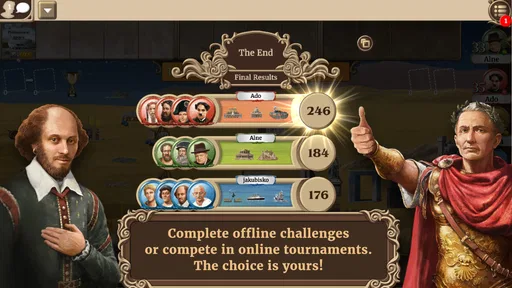
Another cool feature is the multiplayer mode. You can challenge your friends or random players online, which adds a competitive edge to the experience. If you’re more of a solo player, the AI offers a decent challenge, with different difficulty levels to keep things interesting.
Strategic Depth and Replayability
What I absolutely love about Through the Ages is its replayability. Each game is a unique experience, thanks to the multitude of strategies you can employ. Whether you're trying to outsmart opponents in multiplayer or testing new tactics against the AI, there’s always something new to learn.
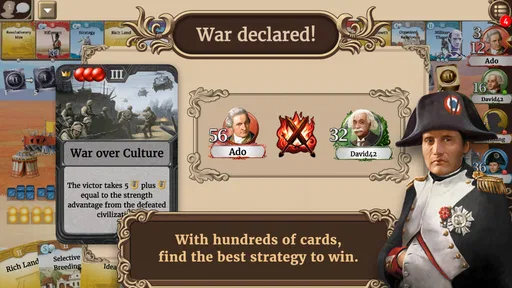
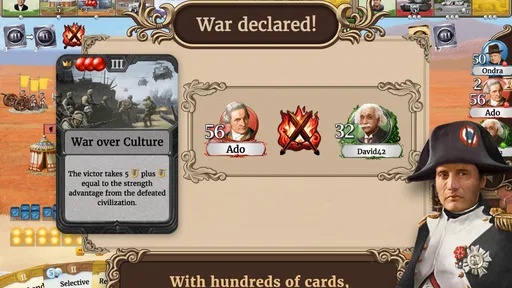
The strategic depth of the game is impressive. Every decision counts, from the leaders you choose to the wars you wage. It’s a game that rewards careful planning and foresight, so if you’re someone who enjoys a mental challenge, this app is definitely for you.
Final Thoughts
In conclusion, Through the Ages is a must-try for any strategy game enthusiast. It beautifully captures the essence of the original board game while offering the convenience of a mobile app. Whether you’re a seasoned strategist or a newcomer looking to test your skills, this game offers hours of engaging gameplay.
So, if you’re ready to embark on a journey through time, building and leading your civilization to glory, give Through the Ages a shot. You might just find yourself hooked on this strategic masterpiece.
Verdict
Strengths of Through the Ages
- Engaging strategy gameplay.
- Rich historical content.
- Deep civilization development.
- Multiplayer mode available.
- Frequent updates and support.
Limitations of Through the Ages
- Complex learning curve.
- Time-consuming sessions.
- Limited offline play.
- High battery usage.
- Requires stable internet.
Other Releases by CGE digital
View All
Galaxy Trucker
Board4.6
Similar Picks in This Category
View All
Ludo King®
Gametion4.1

Ludo
Yarsa Games4.6

Tile Master® - Matching Game
Higgs Studio3.6

Checkers Online
CC Games4.6

Dominoes
Loop Games4.7

Chess
Chess Prince4.6
Frequently Asked Questions
What is the main objective of 'Through the Ages'?
'Through the Ages' is a civilization-building strategy game where players guide a society from ancient times to the modern era. The main objective is to develop your civilization by managing resources, advancing technology, and building a powerful military to earn the most culture points by the end of the game.
Is 'Through the Ages' suitable for beginners?
While 'Through the Ages' offers a rich and complex gameplay experience, it might be challenging for beginners due to its strategic depth. However, the app includes a detailed tutorial and various difficulty levels, making it accessible for new players willing to invest time in learning the mechanics.
Does 'Through the Ages' support multiplayer mode?
Yes, 'Through the Ages' supports both online and local multiplayer modes. Players can compete against friends or other players globally. The game also includes asynchronous gameplay, allowing players to take turns at their own pace, making it flexible for multiplayer interactions.
What are some key features of 'Through the Ages'?
Key features of 'Through the Ages' include a comprehensive tutorial, various difficulty levels, online and local multiplayer modes, and a detailed replay system. The game also provides in-depth statistics and leaderboards, enhancing the strategic experience for players who enjoy competitive gameplay.
Are there in-app purchases in 'Through the Ages'?
'Through the Ages' offers a premium experience with a one-time purchase. There are no in-app purchases or ads, allowing players to enjoy the game without interruptions. This ensures a complete and seamless gaming experience once the game is purchased.
Play our best games!


